
Summer Flounder and Sea Bass Catch in Sea Isle City NJ
Summer Flounder and Sea Bass Fishing in Sea Isle City - What to Expect
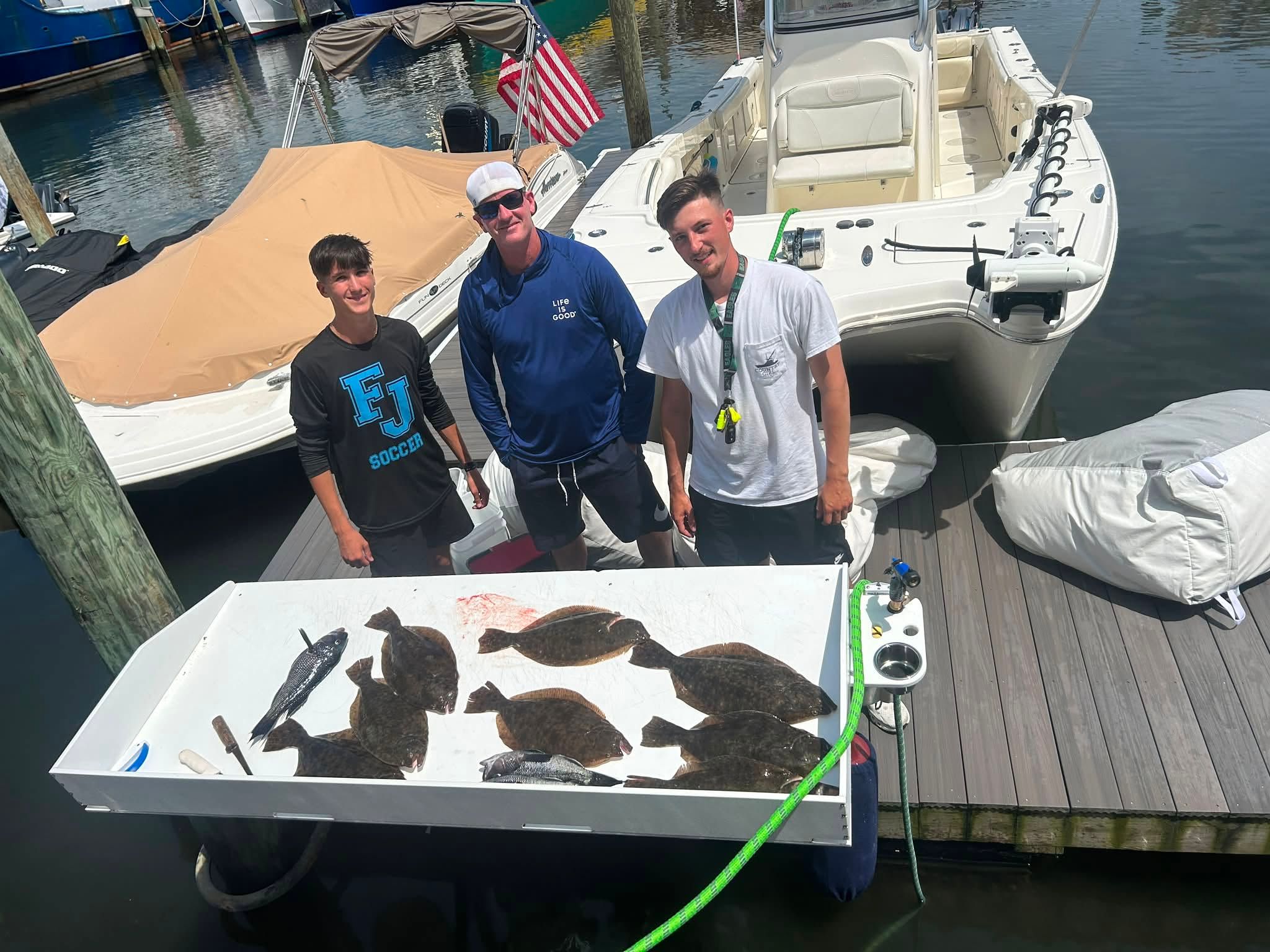
Fishing Charter by Captain Mark Guldin in November
- Top Sea Isle City NJ Fishing Charters. Book Now!


Summary
Reel in explosive action on a fishing charter in Sea Isle City NJ with Captain Mark Guldin of Philly Hooker Fishing Charter. This Friday in October delivers prime conditions for landing summer flounder and black sea bass - two of the region's most sought-after gamefish.
Fishing Charter with Captain Mark Guldin - Rates & Booking
Captain Mark Guldin of Philly Hooker Fishing Charter on Friday, October 16th brings over a decade of expertise to every charter out of Sea Isle City NJ. His methodical approach and aggressive tactics put anglers on consistent action with summer flounder and black sea bass - two species that dominate the autumn bite.
Book your adventure aboard and experience why anglers keep coming back to this productive stretch of New Jersey coast. This charter includes all necessary fishing gear, tackle rigged and ready, and Captain Mark's proven strategies for locating and landing trophy-class fish. Secure your spot and prepare for non-stop excitement on the water.
Highlights of Your Sea Isle City Fishing Experience
Summer flounder season reaches peak intensity in October waters off Sea Isle City. These aggressive predators hunt with speed and power, delivering explosive strikes that test your skills and equipment. Black sea bass add another dimension to the action - aggressive bottom dwellers that hit hard and fight relentlessly on every angler's line.
The combination of prime autumn conditions and Captain Mark's tactical expertise creates a recipe for consistent catches. Whether you're targeting structure-rich bottom zones or working shallow nearshore flats, the setup favors aggressive anglers ready to engage multiple species throughout the day.
Local Species Insights: Summer Flounder and Black Sea Bass
Summer flounder dominate New Jersey's fall fishery, thriving in the cooling Atlantic waters off Sea Isle City. These aggressive bottom predators inhabit structure-laden zones, using their flattened bodies to ambush prey with devastating speed. They respond aggressively to live bait presentations and aggressive retrieves - making them ideal targets for anglers seeking consistent action and table-quality results.
Black sea bass round out the experience with relentless bottom-feeding intensity. These hard-fighting fish school around structure, rocks, and reef zones throughout the offshore environment. Their aggressive nature and powerful runs make every connection memorable. In October waters off Sea Isle City, both species feed with remarkable consistency, rewarding focused anglers with steady action and multiple opportunities throughout the charter day.
Captain Mark's intimate knowledge of where these species concentrate transforms your charter into a highly productive fishing experience. The autumn transition creates ideal feeding windows, and his tactical positioning and presentation techniques capitalize on peak bite periods to maximize your success rate.
Plan Your Fishing Day
Your Sea Isle City fishing charter includes everything needed for a full day of explosive action. Captain Mark provides rigged tackle, live bait, and all necessary equipment - you bring your appetite for the fight. The charter accommodates multiple anglers, creating an energetic group dynamic where experienced fishermen and newcomers alike experience consistent hookups. Expect a dawn departure to capitalize on early-morning bite windows, followed by sustained action throughout daylight hours as both summer flounder and black sea bass feed aggressively.
Fishing in Sea Isle City NJ: Summer Flounder and Black Sea Bass

Summer Flounder Overview
The Summer Flounder, scientifically known as Paralichthys dentatus, is a fascinating flatfish species belonging to the family Paralichthyidae and order Pleuronectiformes. Known affectionately as the "chameleons of the sea," these remarkable fish are one of several sand flounders with both eyes positioned on the left side of their heads—a trait that develops as they mature from normal-looking juveniles. Summer Flounder are grayish-brown with lighter spots that provide excellent camouflage against the sandy and muddy seafloor where they spend their lives. This species is native to the Atlantic Coast and is a beloved target for anglers from Massachusetts to Florida, offering both an exciting fishing experience and excellent table fare.
Summer Flounder Habitat and Distribution
Summer Flounder are primarily found along the East Coast of the United States and Canada, thriving in waters that stretch from North Carolina to Massachusetts, with populations extending from Nova Scotia to eastern Florida. These demersal fish prefer both inshore and offshore environments, making their home in estuaries, bays, and continental shelf waters where sandy and muddy bottoms provide ideal hunting grounds. They typically occupy depths where they can effectively use their camouflage to ambush prey. The species is usually captured using bottom otter trawls, gillnets, and pound nets, indicating their preference for seafloor habitats. In popular fishing destinations along the Atlantic seaboard, Summer Flounder populations remain robust during the warmer months, with seasonal migrations influenced by water temperature and food availability.
Summer Flounder Size and Weight
The average Summer Flounder measures between 15 to 20 inches in length, though specimens can grow considerably larger, reaching up to 37 inches and weighing as much as 5 pounds. The largest recorded individuals have exceeded 26 pounds, making trophy-sized catches a genuine possibility for dedicated anglers. Female Summer Flounder typically grow larger and live longer than males, with maximum observed ages of 17 years for females and 15 years for males. Most fish you'll encounter while fishing will fall in the 15 to 20-inch range, making them ideal for both recreational catch-and-release and culinary purposes.
Summer Flounder Diet and Behavior
Summer Flounder are active ambush predators that rely on their exceptional camouflage and bottom-dwelling lifestyle to catch unsuspecting prey. These cunning hunters can rapidly change their coloring to match their surroundings, allowing them to blend seamlessly with the seafloor until an opportunity presents itself. When ambush tactics fail, they employ impressive swimming ability to chase down faster-moving prey. Their diet consists of a diverse array of bony fish including sand lance, menhaden, Atlantic silverside, mummichog killifish, and small bluefish, supplemented by invertebrates such as crabs, shrimp, and squid. Young Summer Flounder and juveniles face predation from spiny dogfish, monkfish, cod, hakes, sea raven, and longhorn sculpin, while adult fish are vulnerable to large sharks, rays, and monkfish. This natural predation helps maintain ecological balance in coastal marine ecosystems.
Summer Flounder Spawning and Seasonal Activity
Summer Flounder exhibit fascinating reproductive behavior, with peak spawning occurring during October and November when water temperatures drop and plankton abundance reaches seasonal highs. This timing is no accident—the combination of optimal water conditions and abundant food resources significantly increases survival rates for larval Summer Flounder hatching in continental shelf waters. Female Summer Flounder are remarkably prolific, producing between 460,000 to more than 4 million eggs during a spawning season. While these fish can be caught year-round, they are considerably easier to catch between September and November when they're most active and concentrated in accessible fishing areas. Spring and summer months see them more dispersed, though committed anglers can still find success with proper techniques and location knowledge.
Summer Flounder Techniques for Observation and Capture
Live Bait Method: Summer Flounder respond exceptionally well to live baitfish, making this the most effective angling approach. Use live minnows, mullet, or croakers, hooking smaller baits through the eye and larger specimens through the lips. A standard 7-foot casting rod paired with sturdy line capable of handling larger fish is the go-to setup for most anglers. Cast near structure, sandy patches, and channel edges where Flounder commonly hunt. Around coastal cities like Montauk, New York and similar Atlantic fishing hubs, targeting deeper channels during tidal changes often yields impressive results.
Natural Bait Alternative: Sea worms and clams are also effective attractants that Summer Flounder find irresistible. Use a circle hook, as these are easier for Flounder to properly bite, improving your hook-up ratio significantly. A sinker may be necessary to keep your bait within reach of bottom-dwelling Flounder, particularly in deeper offshore waters.
Timing and Location Strategy: Fish during slack tide or early in the tidal change when Flounder are most actively feeding. Target sandy and muddy bottom habitats in 15 to 60 feet of water, adjusting depth based on seasonal migration patterns. The fall migration (September through November) concentrates fish in predictable locations, making this the optimal season for consistent success.
Summer Flounder Culinary and Utilization Notes
Summer Flounder possess excellent food quality and are highly prized for their delicate, flavorful white flesh. The meat is lean and mild, making it suitable for a wide variety of culinary preparations including pan-frying, baking, steaming, and poaching. Their flat body structure yields beautiful fillets with minimal waste. Nutritionally, Summer Flounder provide excellent protein, omega-3 fatty acids, and essential minerals. It's important to note that a permit is required for the commercial sale and purchase of Summer Flounder, supporting sustainable fishery management along the Atlantic Coast. Recreational anglers can keep legal-sized fish for personal consumption, contributing to both food security and connection with coastal traditions.
Summer Flounder Frequently Asked Questions
Q: What is the best bait for catching Summer Flounder?
A: Live baitfish such as minnows, mullet, and croakers are highly effective, as are sea worms and clams. Hook smaller baits through the eye and larger ones through the lips. Circle hooks are recommended because they're easier for Flounder to bite securely.
Q: Where can I find Summer Flounder near major fishing cities?
A: Summer Flounder are abundant along the entire Atlantic Coast from North Carolina to Massachusetts. Popular spots include estuaries, bays, and offshore channels. Around cities like Boston, New York, and Wilmington, look for sandy and muddy bottom habitats in 15 to 60 feet of water during the September through November migration season.
Q: Is Summer Flounder good to eat?
A: Absolutely! Summer Flounder have excellent food quality with delicate, flavorful white flesh that's lean and versatile. They're suitable for pan-frying, baking, steaming, or poaching, and provide excellent nutrition including protein and omega-3 fatty acids. A permit is required for commercial sale, but recreational anglers can keep legal-sized fish for personal consumption.
Q: When is the best time to catch Summer Flounder?
A: While catchable year-round, Summer Flounder are easiest to catch between September and November during their fall migration. Spring and summer require more effort, but success is still possible for patient anglers. Peak spawning occurs in October and November when fish are most concentrated and active.
Q: What fishing gear setup do I need for Summer Flounder?
A: A standard 7-foot casting rod paired with sturdy line capable of handling larger fish is the recommended setup. Use circle hooks for better hook-ups, and include a sinker to keep your bait near the bottom where Flounder hunt. Adjust sinker weight based on water depth and current strength.
Q: Why are Summer Flounder called "chameleons of the sea"?
A: Summer Flounder have the remarkable ability to rapidly change their coloring to match the texture and color of the bottom where they live. This exceptional camouflage allows them to blend invisibly with the seafloor, giving them a significant advantage when ambush hunting for prey. This adaptive capability is why anglers sometimes see them practically vanish against sandy or muddy backgrounds.

Black Sea Bass Overview
The Black Sea Bass (Centropristis Striata) is a fascinating member of the Serranidae family, belonging to the order Perciformes, and represents one of the most popular gamefish along the Atlantic coast. These plump-bodied beauties are instantly recognizable by their extended pelvic and dorsal fins adorned with white spots and bands, while their gray-to-black coloring with white-centered scales creates a striking appearance in shallow and deep waters alike. What makes this species truly remarkable is its unique biological characteristic: they are born female and can transition to males when they reach 9 to 13 inches in length—a fascinating adaptation influenced by social dynamics within their population. Found abundantly from the Gulf of Maine down to the Florida Keys and throughout the Gulf of Mexico, the Black Sea Bass has become increasingly accessible to anglers in places like Massachusetts and beyond, making it a cornerstone of recreational fishing culture along America's eastern seaboard.
Black Sea Bass Habitat and Distribution
Black Sea Bass thrive in a wide variety of underwater structures and environments, making them predictable targets for seasoned anglers. During summer months, they congregate around sunken wrecks, rocky bottoms, old pilings, and wharves at depths typically less than 120 feet. Juvenile bass prefer estuaries where they can feed safely and avoid larger predators, while adult populations spread across offshore and nearshore reefs. The species' geographic range has expanded dramatically in recent years; historically confined to Massachusetts as the northernmost limit, warming ocean temperatures have pushed populations northward into the Gulf of Maine, where they now thrive in previously marginal habitats. Winter migration patterns see these fish retreating to warmer South Atlantic states and offshore deeper waters. Their adaptability to various bottom structures—from rocky outcrops to sandy flats near jetties and piers—makes them accessible to both shore-based and boat anglers across diverse coastal regions.
Black Sea Bass Size and Weight
The Black Sea Bass typically ranges from 10 to 26 inches in length, with most recreational catches weighing between 2 and 9 pounds. While the average caught fish hovers around 3 to 4 pounds, the species is capable of reaching impressive proportions; the world record stands at an extraordinary 10 pounds 4 ounces, caught in Virginia Beach in January 2000. Larger males, which often exceed 5 pounds, tend to inhabit deeper waters with rocky bottoms and are prized by trophy-seeking anglers. Juveniles are considerably smaller, typically under 10 inches, and display the characteristic brown coloration with a dark stripe running the length of their body. This size progression correlates directly with their sex change; females mature at 2 to 5 years of age and can produce approximately 280,000 pelagic eggs annually, ensuring robust population recruitment.
Black Sea Bass Diet and Behavior
Black Sea Bass are primarily bottom feeders with a diverse diet that reflects their opportunistic hunting strategy. Adult and juvenile populations consume a variety of invertebrates including hermit crabs, rock crabs, squid, and razor clams—prey items they root from sandy and rocky substrates. While predominantly bottom-oriented hunters, they will occasionally strike at suspended jigs, plugs, and lures, making them less predictable than pure benthic foragers. Their behavior changes seasonally and with water temperature; during warmer months, they exhibit increased feeding activity and move shallow to feed and spawn. Social hierarchies play an important role in their biology: the presence or absence of dominant males directly influences whether larger females will undergo sex reversal to fill the reproductive role, demonstrating that this species exhibits complex behavioral ecology beyond simple feeding and survival mechanics.
Black Sea Bass Spawning or Seasonal Activity
The Black Sea Bass displays dramatic seasonal and reproductive behaviors that dictate their availability to anglers. Spawning season triggers remarkable physiological changes in males, who develop brilliant blue coloration and a pronounced hump on their heads—a visual transformation that intensifies their appeal to observant naturalists. Females typically mature between ages 2 and 5, and their reproductive output of approximately 280,000 pelagic eggs per season ensures population sustainability. Summer months (June through September) represent peak feeding and congregation periods near shore, making this the ideal fishing window for most anglers. The Federal Recreational Black Sea Bass season operates during two distinct periods: February 1 through February 28, and May 15 through December 31, with restrictions designed to protect spawning populations. Winter migration pushes populations southward and offshore, requiring anglers to adjust tactics and target deeper, warmer Atlantic waters if they wish to maintain consistent success during colder months.
Black Sea Bass Techniques for Observation or Capture
Method 1: Wreck and Reef Fishing with Medium-Weight Tackle — Equip yourself with a 6 to 8-foot medium-weight rod paired with a reel spooled with 20 to 30-pound fused, monofilament, or braided line. Navigate to known wreck sites, rocky reefs, or old pilings during summer months (late spring through early fall) when bass congregate in these structures. Deploy two-hook bait rigs baited with live squid or fish strips, allowing the rig to settle on the bottom where bass actively feed. This method produces consistently excellent results and allows you to feel the distinctive take of a striking bass before the hook set.
Method 2: Jigs and Lures Around Nearshore Structures — Venture to jetties, piers, and wharves with smaller jigs (1/4 to 1/2-ounce) tipped with squid or soft plastics. Cast near the structure edges and along drop-offs, retrieving with subtle rod movements to trigger aggressive strikes. This technique works particularly well during early morning and evening hours when light penetration changes and bass move to feed. The medium odds for angling success with this species means patience and persistence yield rewards.
Method 3: Estuarine Summer Fishing for Juveniles and Shallow-Water Adults — Explore shallow estuaries during summer months where juvenile populations congregate and larger adults pursue baitfish migrations. A light 6-foot rod with 10 to 15-pound line allows better sensitivity to subtle bottom touches. Cast live minnows or shrimp into 8 to 15-foot depths along creek channels and grass-lined banks. Around Massachusetts and coastal New England, estuaries like those in Cape Cod and Rhode Island offer outstanding access to both juvenile and adult populations, making these regions excellent starting points for developing your Black Sea Bass skills.
Black Sea Bass Culinary or Utilization Notes
The Black Sea Bass earns its reputation as an excellent food fish with firm, white flesh that remains moist during cooking and delivers a mild, slightly sweet flavor profile. The meat is versatile in the kitchen—suitable for baking, pan-searing, steaming, or grilling—and holds structural integrity well due to the species' relatively dense musculature. Culinary experts often recommend leaving the skin on during cooking to prevent drying, and the fish yields substantial fillets even from modest 3 to 4-pound specimens. Nutritionally, Black Sea Bass provides lean protein, omega-3 fatty acids, and essential minerals, making it a heart-healthy dietary choice. From a sustainability perspective, the Federal recreational regulations and seasonal closures demonstrate a commitment to maintaining healthy population levels, meaning responsible anglers can enjoy this species with confidence in its long-term availability.
Black Sea Bass Frequently Asked Questions
Q: What is the best bait for catching Black Sea Bass?
A: Live squid and fish strips consistently outperform other baits for Black Sea Bass, though hermit crabs and razor clams also produce excellent results. Live bait presentations on two-hook rigs deployed on the bottom near wreck structures yield the highest success rates, particularly during summer months when feeding activity peaks.
Q: Where can I find Black Sea Bass near Massachusetts?
A: Black Sea Bass are found throughout Massachusetts coastal waters, from the rocky reefs off the North Shore to the Cape Cod wrecks and southern estuaries. Summer congregation near jetties, piers, and shallow wrecks in 30 to 80 feet of water provides excellent access, while deeper offshore structures hold larger specimens during spring and fall shoulder seasons.
Q: Is Black Sea Bass good to eat?
A: Absolutely—Black Sea Bass ranks among the finest eating fish on the Atlantic coast. The firm, white flesh delivers a mild, slightly sweet flavor that remains moist during cooking. Pan-searing fillets skin-side down produces restaurant-quality results, and the species' nutritional profile—including omega-3 fatty acids and lean protein—makes it a healthy culinary choice.
Q: When is the best time to catch Black Sea Bass?
A: Late spring through early fall (May through September) represents the prime window when Black Sea Bass congregate near shore in accessible depths. The Federal recreational season runs February 1-28 and May 15-December 31, though summer offers the most reliable and productive fishing. Early morning and evening hours typically produce more aggressive feeding than midday periods.
Q: What rod and reel setup do I need for Black Sea Bass?
A: A 6 to 8-foot medium-weight rod paired with a conventional or spinning reel spooled with 20 to 30-pound line provides the ideal balance of sensitivity and power. This setup allows you to feel bottom structure and fish movements while maintaining sufficient strength to land 5+ pound specimens and maneuver in weedy or rocky environments.
Q: How has climate change affected Black Sea Bass distribution?
A: Warming Atlantic waters have pushed Black Sea Bass populations northward beyond their historical Massachusetts boundary into the Gulf of Maine, where water temperatures have risen sufficiently to support thriving populations. This range expansion creates new angling opportunities in previously marginal habitats and represents one of the most visible ecological shifts in Atlantic coastal fisheries over the past two decades.